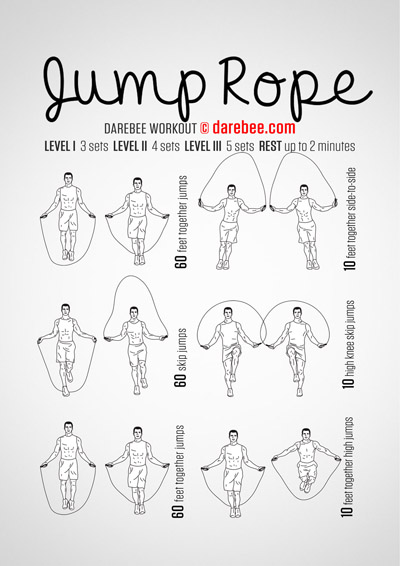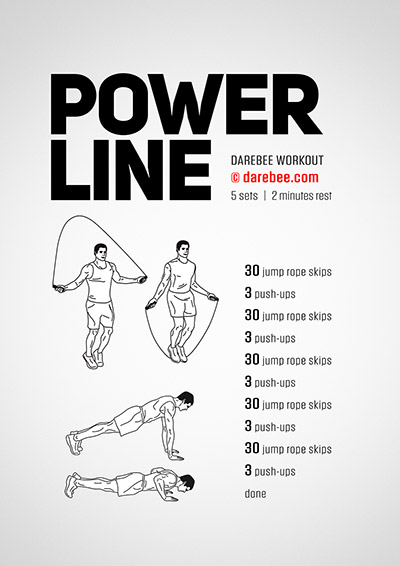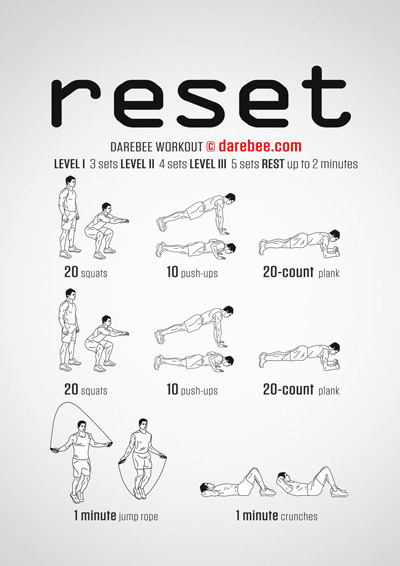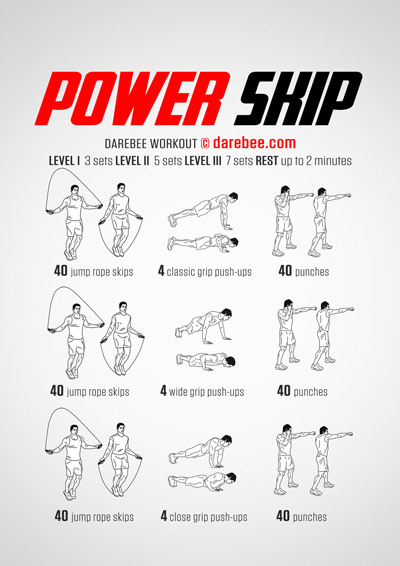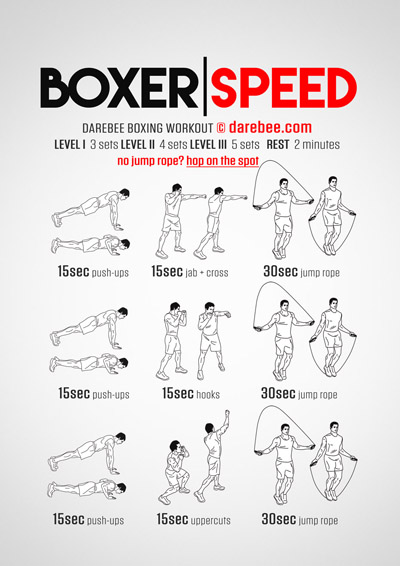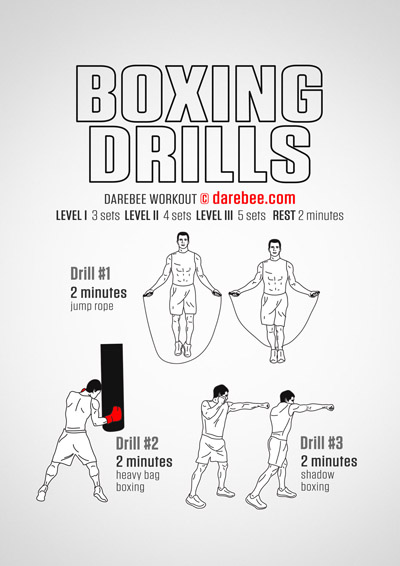

This collection uses the rope as both a conditioning engine and a coordination test, mixing pure rhythm-building sessions with workouts that splice rope intervals into full-body circuits and boxing-style rounds. One entry is essentially a technique ladder that cycles through several jump patterns and directional changes so timing, foot speed, and ankle spring improve alongside your breathing. Another keeps things deliberately minimalist: short, repeatable blocks of rope work paired with small doses of upper-body pressing, which makes it easy to repeat often and track progress cleanly. A third turns the rope into the “cardio splice” inside a strength-endurance loop, blending lower-body work, core bracing, and a brief trunk finisher so you get both muscular fatigue and an aerobic hit in the same round. Then the intensity ramps up with a faster, higher-impact option that layers rope intervals with pressing variations and striking-speed segments for a sharper VO2-style challenge. The last two lean into fight-gym structure: short round-based efforts that load the upper body and coordination, and an equipment-based drill session (bag work optional) where rope rounds slot into a broader “skills + conditioning” package, with a built-in fallback if you don’t have a rope.
The payoff is the kind of fitness that feels athletic, not just sweaty: better cardiovascular capacity and recovery, quicker feet, cleaner timing, and tougher calves and lower legs from repeated elastic contacts, plus more durable shoulders and trunk control from the sessions that add strength and striking components. The best way to use this collection is to treat rope work as a skill first and a conditioning tool second - keep jumps small and quiet, stay tall, and aim for smooth rhythm rather than frantic speed. Rotate the sessions by intent: a rhythm and pattern day to sharpen coordination, a simple repeatable day to build aerobic power, a mixed circuit day to accumulate full-body fatigue, then a harder round-based day when you want intensity and faster recovery demands. Progress by adding sets or levels and trimming rest before chasing faster turnover, because consistency and clean mechanics are what make the rope turn into a long-term advantage rather than a short-term burn.