
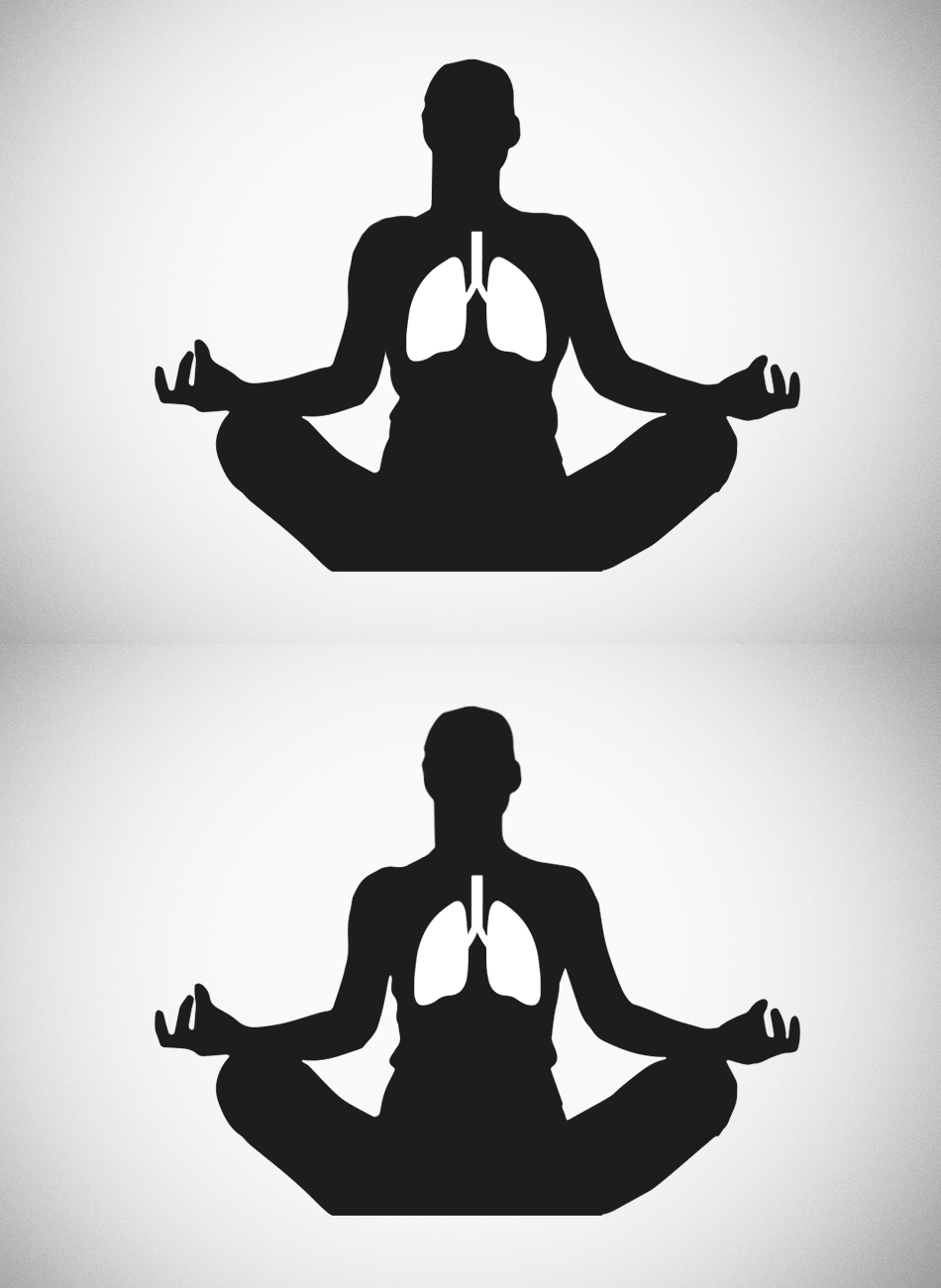
The body is a physical thing. It is made up of muscles and bones which make it look like its mechanical work is powered by an assembly of cables and pulleys. Everything it experiences includes some kind of contraction or relaxation of these muscles so the heart acts like a pump and the lungs work like bellows.
But beyond the mechanics of the body there is also a complex network of neurons, found throughout the body, that use neurochemicals to activate them and communicate with each other and synapses, found mostly in the brain, that act like junction points between one network of neurons and another. Synapses use electrical impulses to achieve their task.
All this complexity comes to an abrupt end when stop taking breaths. When such seemingly simple thing has such profound effect it is safe to assume that it impacts much more than the obvious oxygenation that takes place in the bloodstream and the brain, when we breathe.
Indeed, we’ve shown before how breathing can be used to control negative emotions, like anxiety, and how whether we breathe in through the nose or mouth makes a difference to how we feel when we exercise. We’ve also shown before that correct breathing technique makes working out more productive and that the rhythm we establish when we breathe in and out is key to how well we can exercise and for how long.
You’d think there wouldn’t much to add to all this and this is almost true. More recent research on the subject of breathing[1] has only supplied additional information on its impact on emotions and emotional regulation. And, we have also seen that breathing plays a key part in the activation of memory so the brain can both store and recall memories, better.[2]
As more neuroscientific studies are carried out[3] what emerges is a picture of breathing being the result of a careful coordination between muscles in the body and the brain’s emotional and cognitive functions. A study that tracked the mechanism behind sighs[4] showed that this is an adaptive response that enables the lungs to maintain their potential to be used to their full capacity and activates the regions of the brain that integrate sounds and sight so we can understand where we are in the external world.
The overall effect of correct breathing increases our mental capacity to deal with tasks that stretch our brain[5], reduces the stress we feel and can reduce the impact of negative emotions such as anxiety and fear.
Brain, Mind And Body
The brain and the body used to be treated as two separate things. Neuropsychology studies show that they can no longer be treated as separate entities.[6] We now know that the ability to better regulate our breathing not just during exercise but throughout the day, improves the quality of our life through improved emotional states, enhanced cognitive capabilities and better physical performance.
It also positively impacts our ability to concentrate when we study or perform cognitive work. What this means in practical terms is that when you're exercising, learning complex dance routines or combat moves the breathing pattern you employ is key to the success you will achieve. Breathing through the mouth delivers the same amount of oxygen as breathing through the nose but it doesn't activate the centers in the brain that guide learning, memory, awareness and perception.
There are four key steps to better overall breathing:
- Take deep, even breaths, throughout the day.
- Practise sighing every now and then to activate your body’s and brain’s deeper functions and relieve stress.
- Be aware of how emotions and stress affect your breathing and consciously take deep breaths when stressed.
- Understand the pattern of breathing required by the sport or physical activity you engage in and consistently employ it.
Workouts To Try
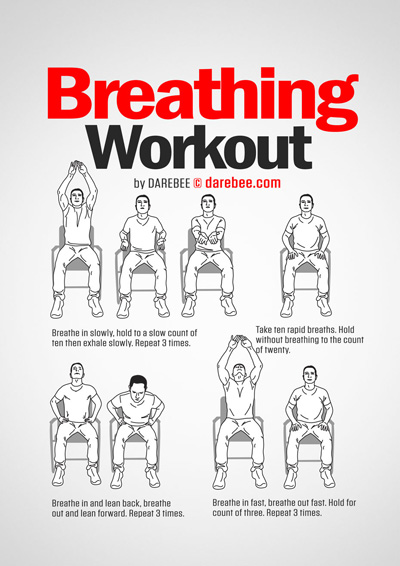
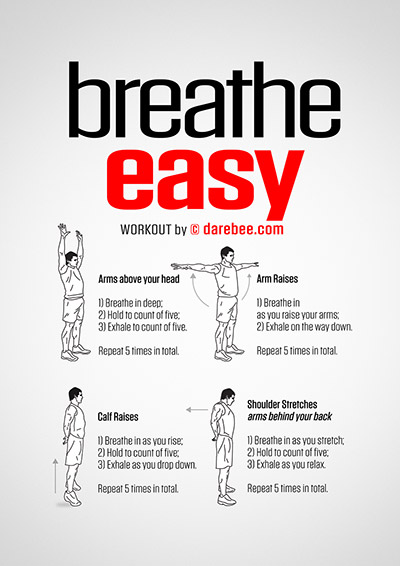
Summary
Breathing is proving to be central to how the body and brain work and how emotions are controlled. By learning to better control our breathing we improve not just the quality of our fitness but also the quality of our thinking and the way respond to external events. This helps us achieve a better, overall balance in body and mind.
Research
- Annual Review of Neuroscience Vol. 45:223-247 (Volume publication date July 2022) First published as a Review in Advance on March 8, 2022
- Hippocampal Respiration-Driven Rhythm Distinct from Theta Oscillations in Awake Mice. Vivan Nguyen Chi, Carola Müller, Thérèse Wolfenstetter, Yevgenij Yanovsky, Andreas Draguhn, Adriano B.L. Tort and Jurij Brankačk. Journal of Neuroscience 6 January 2016, 36 (1) 162-177.
- Nasal Respiration Entrains Human Limbic Oscillations and Modulates Cognitive Function. Christina Zelano, Heidi Jiang, Guangyu Zhou, Nikita Arora, Stephan Schuele, Joshua Rosenow and Jay A. Gottfried. Journal of Neuroscience 7 December 2016, 36 (49) 12448-12467.
- Li, P., Janczewski, W., Yackle, K. et al. The peptidergic control circuit for sighing. Nature 530, 293–297 (2016).
- Ma X, Yue ZQ, Gong ZQ, Zhang H, Duan NY, Shi YT, Wei GX, Li YF. The Effect of Diaphragmatic Breathing on Attention, Negative Affect and Stress in Healthy Adults. Front Psychol. 2017 Jun 6;8:874. doi: 10.3389/fpsyg.2017.00874. PMID: 28626434; PMCID: PMC5455070.
- Brower V. Mind-body research moves towards the mainstream. EMBO Rep. 2006 Apr;7(4):358-61. doi: 10.1038/sj.embor.7400671. PMID: 16585935; PMCID: PMC1456909.