
Of all the things you could try learning at home, on your own, martial arts is seemingly the least suitable. The mystique of ‘secret knowledge’[1] handed down from master to student[2] and the persistent popular image of sweaty halls and students standing in lines to learn their art is hard to shake.
Yet, in its core, martial arts is nothing more than a means to control the body in order to manoeuvre it in physical space.[3] It’s no different in this regard to let’s say running and cycling or, at the slightly more complex spectrum of physical activities, dancing, tennis, football and boxing. All of these sports have a component of alone-practise. Specific moves, techniques and training that anyone can perform in their back garden or their living room.
Martial arts is no different. While the image that we have from popular culture is that of a person who can perform complex, acrobatic combat moves and move their body in ways that virtually baffle the mind, the foundation to that end result lies in basic moves and exercises that condition the body and develop the mind.
The mental component of martial arts is key because the human body was not really made for combat at all. It has relatively soft muscles when compared to other mammals in the animal kingdom, it sports no claws or long, sharp teeth and unless exercised regularly, it loses a lot of its physical strength, speed and endurance.
Martial arts requires all three.[4] It also requires flexibility, balance, agility, spatial awareness and the ability to accurately predict how the body interacts with the environment when it is in motion. Because of its perceived complexity it is also considered as the one sport or discipline you can’t learn on your own, at home.
This is not quite true. Like most physical activities martial arts started out at the individual level where everything had to be worked out from scratch. There were no instructors to begin with and no instruction to pass on. When it did become necessary, for cultural as well as practical reasons, for this to happen, inevitably, instruction was formalized, a system was created and instructors became credentialed within that system.[5]
This led, in turn, to differentiations in styles based upon philosophical and cultural perspectives and the need to establish unimpeachable authority within each particular martial arts style. The sum total of all this led to an inevitably opaque martial arts culture where rumours of secret lore abounded, origins were intentionally shrouded, and where reality and myth became blurred.
Fast forward to today and we know that martial arts is a kinematic type of calisthenics that uses the basic principles of physics to turn the body into an instrument that can be used for unarmed combat. Within that framework all else fades away. There are, truly, only so many ways one can punch and kick and only so many combinations that can effectively be put together.
This leads us, naturally, to the obvious, unasked question of the opening paragraph of this article: Is it possible to learn martial arts at home? Traditionally, the answer to this was unequivocally, “no”. Today, with everything we know it is a resounding “yes”. Here’s why:
- The body is an optimization machine.[6] There are only so many effective ways we can punch and kick. If a complete novice started out with the simple desire to throw punches and kicks. Inevitably, in the initial phases of this everything would be wrong. Focus, body positioning, synchronization, lower and upper kinetic chain movement, breathing and flexibility. Yet, with repetition comes fatigue and with fatigue the body’s natural inclination to optimize each movement for energetic efficiency kicks in. At that stage, over time, a total beginner with no in-person guidance, will find themselves becoming as adept as a martial artist who spends hour after hour standing in line and practising in a martial arts hall.
- The brain needs time to learn combat moves. Everyone who has learnt a new dance understands the process. We start with the first few steps, put them in sequence, try to memorize them and then practise them until we develop muscle memory. Then we go onto the next moves and so on. Muscle memory is multi-factorial consisting of both cellular and neural components. Martial arts training activates both, obviously, but it’s the neural one we need to give time to kick-in, when training at home. As it turns out, there is a strong overlap between martial arts and dancing.[7]
- The body needs time to develop balanced strength. If we could suddenly and magically make every muscle in the body grow to its maximum strength the chances are that we’d still get injured exercising or be unable to deliver sufficient speed and power and grace of movement in some sports. The reason for this is because power and fluidity of movement comes with sports-specific training that helps muscles coordinate in such a way as to develop just the right amount of strength for maximal power output. In martial arts, as in every other physical activity, practise makes perfect. Home training with some persistence will get you there.
- Martial arts is a dance of sorts.[8] Any of us can learn dance moves, on our own, at home. Martial arts is no exception. Just like with a dance, it takes time, patience and persistence.
- Martial arts is a full-blown kinesthetic experience.[9] Again, this is not that much different to learning a dance and dancing from joy. To actually feel the kicks and punches, the movement of the body’s kinetic chains and the coordination of breathing and heartbeat with every movement requires some time. As skill develops however the experience of training, even when the training is not that hard, becomes fully immersive. The mind/body barrier disappears and the practitioners finds themselves taking part in the martial arts activity with all their senses.
Martial arts moves are a great exercise for the body and brain.[10] They help with neurogenenesis, the creation of new neuron networks in the brain, fight off dementia, help the brain remain younger and more resilient and they keep the body biologically young. Martial arts also helps develop lifeskills such as the ability to concentrate better and direct attention to what matters [11] that can be used in other walks of life.
While learning at home may make you a great martial artist it will not, however, make you a great fighter. Like everything else, competition fighting requires sparring practise and for that you do need a martial arts club, am instructor and many different sparring partners. But if competitive martial arts is not what you are looking for, learning martial arts at home, on your own, in many ways is a return to the very roots of all martial arts disciplines. You will greatly benefit from it in your physical, mental and psychological health.
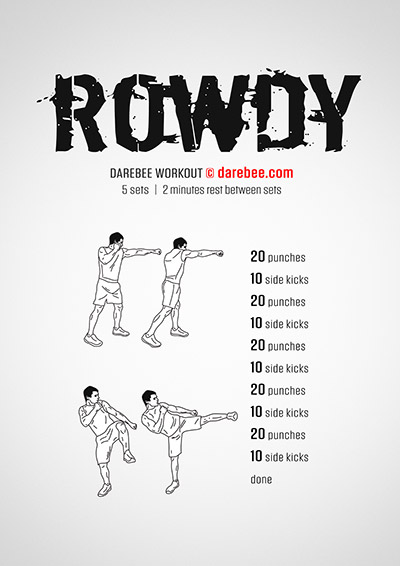
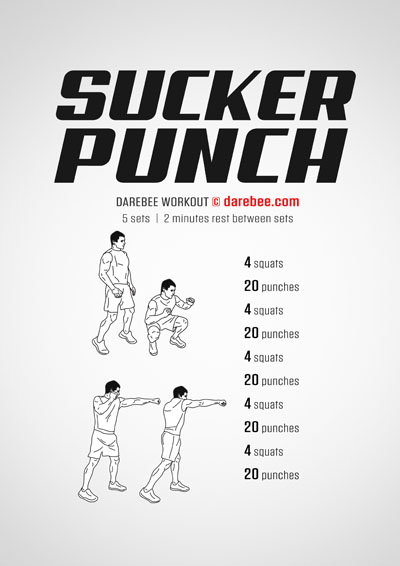
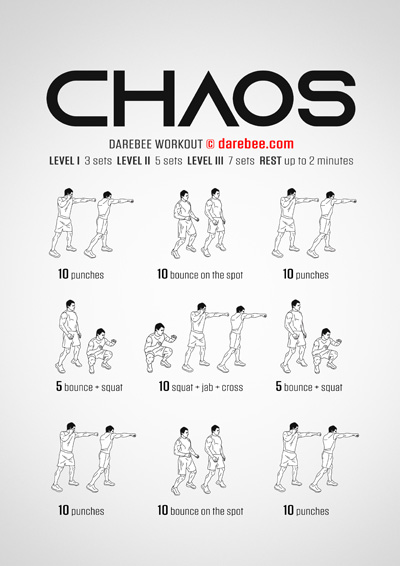
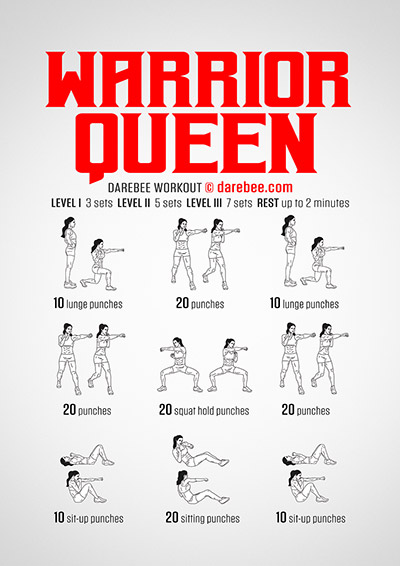
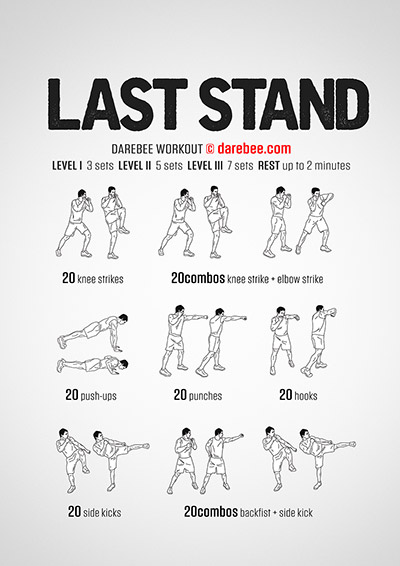
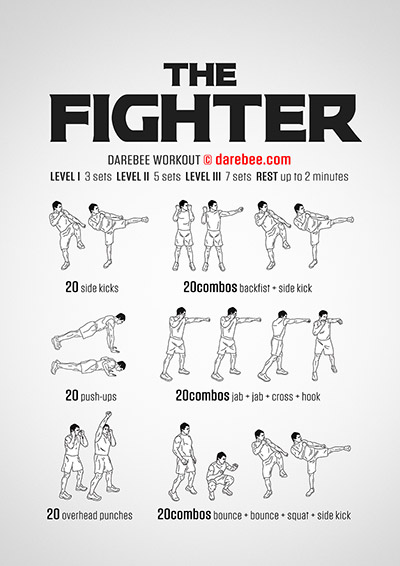
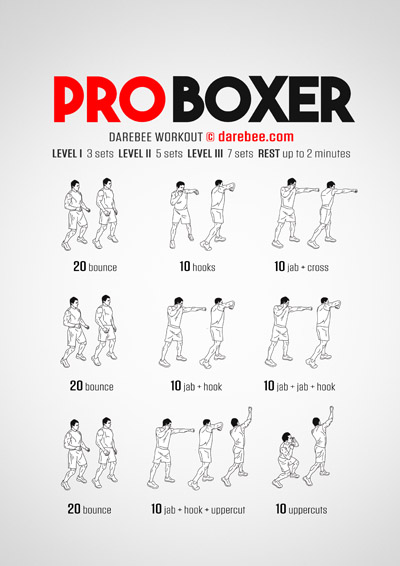
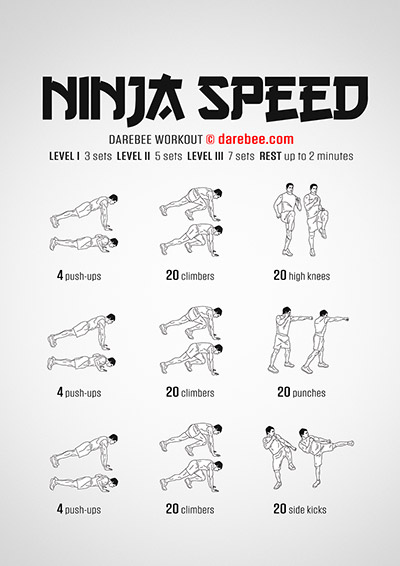
Programs you can try: Fighter’s Codex, Fireheart, Combat HIIT, Boxer Prime, Avatar Upgrade.
References
- Keenan, John. (1990). The mystique of martial arts: A response to Professor McFarlane. Japanese Journal of Religious Studies. 17. 10.18874/jjrs.17.4.1990.421-432.
- Henning, Stanley E. “Academia Encounters the Chinese Martial Arts.” China Review International, vol. 6, no. 2, 1999, pp. 319–332. JSTOR, jstor.org/stable/23732172. Accessed 18 Mar. 2021.
- Michael S. Feld, Ronald E. McNair and Stephen R. Wilk. The Physics of Karate. Scientific American, Vol. 240, No. 4 (April 1979), pp. 150-161. Scientific American, a division of Nature America, Inc.
- Podstawski, Robert & Markowski, Piotr & Choszcz, Dariusz & Lipiński, Adam & Borysławski, Krzysztof. (2017). Effectiveness of martial arts training vs. Other types of physical activity: Differences in body height, body mass, bmi and motor abilities. South African Journal for Research in Sport, Physical Education and Recreation. 2017. 111-133.
- Paul Bowman (2016) Making Martial Arts History Matter, The International Journal of the History of Sport, 33:9, 915-933, DOI: 10.1080/09523367.2016.1212842
- Mattson MP. Evolutionary aspects of human exercise--born to run purposefully. Ageing Res Rev. 2012;11(3):347-352. doi:10.1016/j.arr.2012.01.007
- Shan G. Comparison of repetitive movements between ballet dancers and martial artists: risk assessment of muscle overuse injuries and prevention strategies. Res Sports Med. 2005 Jan-Mar;13(1):63-76. doi: 10.1080/15438620590922103. PMID: 16389887.
- Raimondo, Sergio & Coccia, G. & Ceccarelli, G.. (2013). Martial arts and contemporary dance. Rhythmic convergences of the human body. 13. 20-26.
- SAMUDRA, J.K. (2008), Memory in our body: Thick participation and the translation of kinesthetic experience. American Ethnologist, 35: 665-681.
- Dahmen-Zimmer K, Jansen P. Karate and Dance Training to Improve Balance and Stabilize Mood in Patients with Parkinson's Disease: A Feasibility Study. Front Med (Lausanne). 2017;4:237. Published 2017 Dec 19. doi:10.3389/fmed.2017.00237
- Johnstone A, Marí-Beffa P. The Effects of Martial Arts Training on Attentional Networks in Typical Adults. Front Psychol. 2018;9:80. Published 2018 Feb 8. doi:10.3389/fpsyg.2018.00080