
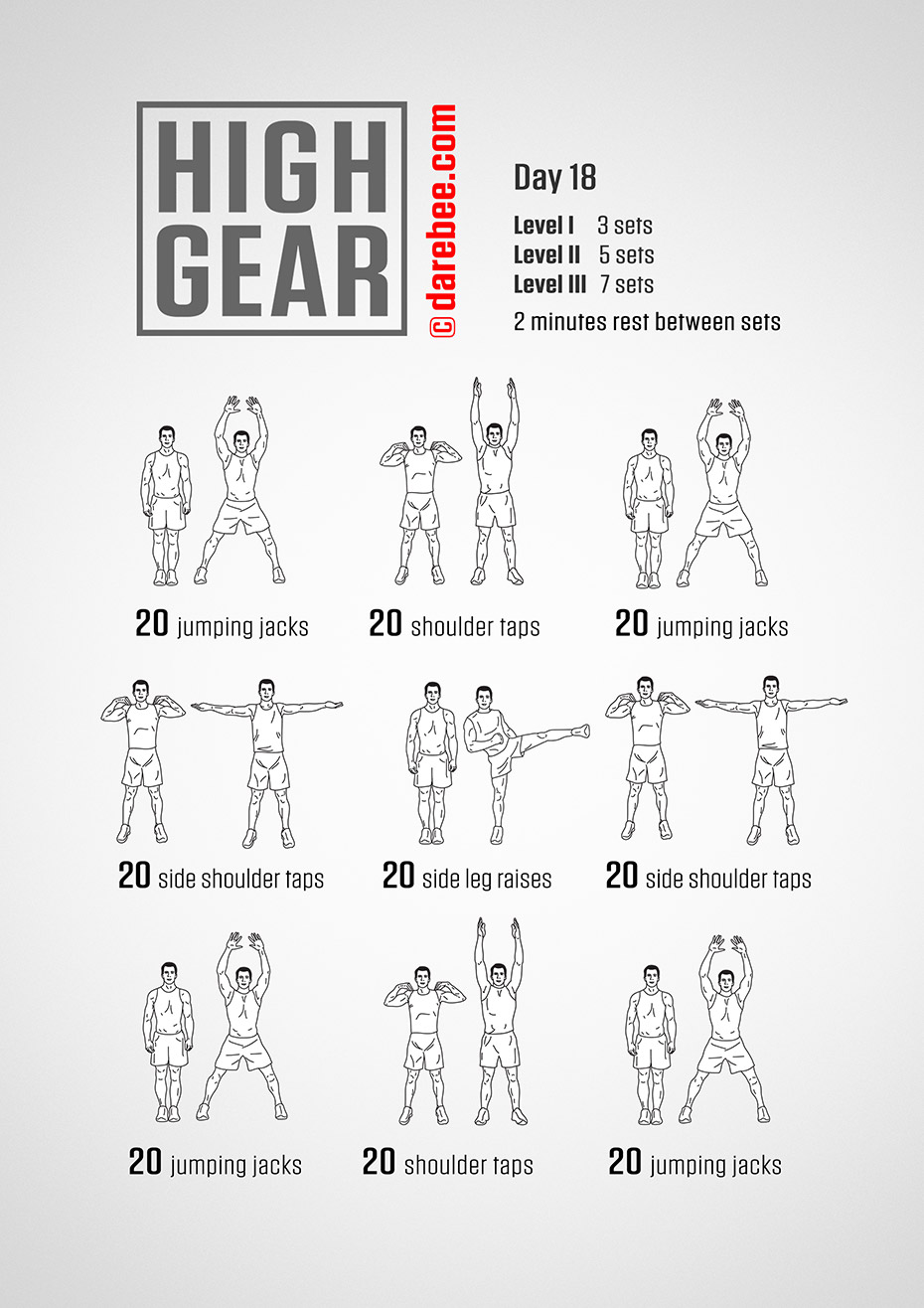
Shoulder taps show up today without a plank in sight. This is the standing version: fingertips to your shoulders, then both arms pressed to full extension overhead. The side shoulder tap is the same start with the arms driving straight out to the sides at shoulder height instead. The top and bottom rows run 20 jumping jacks, 20 shoulder taps and 20 jumping jacks; the middle row is 20 side shoulder taps, 20 side leg raises and 20 side shoulder taps.
Two directions, one movement pattern, and between them they cover the whole shoulder. Pressing overhead loads the front and top of the deltoid through its longest range, while pressing out to the sides hands the work to the middle of the shoulder and the upper back. Sixty presses per set across the two versions is real volume for a bodyweight card, and the jumping jacks in the corners keep the heart rate high enough that the shoulders are working tired rather than fresh. The side leg raises sit in the centre as the one tile that gives the arms a moment while the hips take a turn.
Take every overhead tap to a locked-out finish with your ribs pulled down, because a back that arches to get there is reaching with the spine instead of the shoulders. On the side version, keep both arms level with your shoulders at full reach and return the fingertips all the way to the shoulder each rep. Keep the tempo even - the presses are meant to be continuous, not paused. On the side leg raises, stand tall and lift with the hip.
Shoulder taps that never touch the floor - same name, an entirely different day's work.
Make it Harder: Press to a full lockout on every tap and take a slow count on the way back to your shoulders.
Make it Easier: Cut the jumping jacks to 12 per corner and keep all of the arm work exactly as printed.